RSS Feed

On that sad height; Māori, Pasifika and the assisted dying debate.

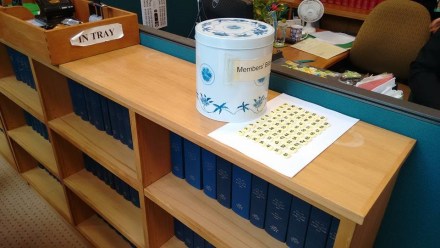
This is a picture of a tin. A very important tin.
NanasTin

It looks like Nana’s biscuit tin, but is actually the tin from which ‘members’ bills’ are drawn ‘from the ballot’ every second Wednesday of the month in Parliament. If we were to see inside the tin on such a Wednesday we would see roughly 80 of the numbered plastic tiles in the photo above, each one identifying one MP’s private bill waiting to see the light of day. Many of them won’t.

Private members’ bills provide for some of our most important social reforms.Louisa Wall submitted her private member’s bill on same-sex marriage in May 2012; it was drawn in August 2012, enacted into law by April 2013. Legal and social history was made.

In October last year another tile went in the tin; David Seymour’s End of Life Choice Bill. And there it waits. It is the latest in a growing line of such tiles; last year Maryan Street’s End of Life Choice Bill was withdrawn after languishing for 18 months, and a lack of enthusiasm shown by Labour leader Andrew Little in 2013, an election year. Back in 2003 NZ First MP Peter Brown’s “Death with Dignity” bill was only narrowly defeated in a conscience vote 60-58 at its first reading. In 1995 Michael Laws also had a go; only to be defeated by a much wider margin (61-29 against).

Euthanasia is not a new issue, but it seems to me that medically-assisted dying, as one kind of euthanasia, has received a lot of positive media comment and profile recently.

  • Maryan Street’s submission of a petiton to Parliament seeking law change to allow assisted dying received good coverage here, here and here. In fact, the Health Select Committee has launched a Parliamentary inquiry as a result of the petition, for which submissions closed on 31 January.
  • Lawyer Lecretia Seales sought to have the Courts interpret the Crimes Act 1961 in such a way that her own doctor would not face prosecution for helping her to die. The Courts declined the opportunity just before her death, leaving any such reform to Parliament.
  • Trade unionist and former head of the CTU Helen Kelly, in coming to terms with her own terminal illness, has also sought the right to assisted dying.
  • Cases involving people seeking to end their own lives at a time of their choosing is being reported perhaps more favourably in the media as a prime example, Peter and Patricia Shaw who killed themselves in October last year).
  • There has been some considerable debate within mainstream media outlets about euthanasia. I know this because Stuff has a tab under its ‘National’ news page called ‘Euthanasia’, so it must be true.

In my view there is considerable work has been done that is preparing the ground for David Seymour’s Bill to be ushered into law should it be drawn. Of course politics being what it is, the Bill may not succeed anyway. Nevertheless the time is ripe now for Māori and Pacific peoples to be heard in what is developing into a nation-wide debate. Except I’m not hearing them. Well, that’s not entirely true. There are a few opinion pieces here and there, but nothing like the furious debate at the time of the Royal Commission on Genetic Modification (200 submissions were received by Royal Commission from Māori, for example), and the attention (rightly) given to Māori suicide prevention generally.

What might Māori and Pacific practices around death and dying have to reveal about assisted dying? What might tikanga reveal? While religious creed might uphold the sanctity of life, how might such creeds influence or cohere with tikanga Māori perceptions of the sanctity of life? In the scraps of material I have seen Māori and Pacific peoples are divided; there is no one view about euthanasia, including assisted dying. There are few signals coming from Māori politicians; the Māori Party is non-committal although ‘open to a debate’ while Marama Fox is unconvinced assisted-dying legislation is needed. Metiri Tūrei has voiced support for the current Parliamentary Inquiry, but little more.

To be fair, there may have been a plethora of Māori and Pacific voices included in the submissions to the inquiry that closed three weeks ago. I hope so, but I feel somewhat doubtful, given the lack of chatter about the issue detectable on social media at least. We’ll see once the inquiry progresses. The late Amster Reedy was cited by the Nathanial Centre in its own submission to the current Parliamentary inquiry:

“We bring people into this world, we care for them right from the time they are conceived, born, reared, in health, sickness and in death. The rituals still exist for every part of our lives – we just need to have faith in our ancestors. Euthanasia is foreign to Māori and has no place in our society.”

Penehe Patelehio (Tokelauan, Samoan, Cook Island) was cited in the same submission:

“When someone is ill or dying, the idea of assisted-suicide or euthanasia is entirely foreign to us. There is no word in our language for this concept and consequently it does not enter into our thinking. The opportunity to care for and look after someone who is ill or dying/suffering is seen as a blessing even though it may present significant financial and other challenges. At such times the extended family and community networks come to the fore – it is common for immediate and extended family and community members to visit, provide food, and massage and converse with the person who is ill.”


For me personally the debate is not really about the value of life vs the value of personal autonomy to choose to die. Both things are good and neither are absolute. I recognise that the value of life, or the right to life will not always win over other considerations (the ability in law to defend oneself to the death from attack is an example where the life of the attacker is not to be preserved at all costs). In my mind that debate is actually a little sterile, but important for those who want to contribute to it. I want to ask instead: how vulnerable might elderly or sick Māori and Pacific peoples be within a regime that allows assisted dying?

One of the oft-cited great risks of any assisted dying regime is that elderly people facing the end of their lives due to illness will seek to end their lives prematurely so as not to be a ‘burden’ on their families. Others might seek assisted dying, not so much at their own behest, but at the behest of others family members. In a society where 1 in 10 older persons (and proportionally more Māori) are reported to experience some kind of abuse especially connected to vulnerability and coercion, such risks must not be ignored.

To be honest, the idea of assisted dying frightens me. I am not really frightened of the idea of humanely ending the life of someone in terrible and terminal pain, although I cannot extricate my Christianity from my position that life is worth preserving. I can understand, though, why there appears to be so much public support for such a choice to be allowed. Many of those who voice such an opinion have watched their own friends and/or family die. Who am I to gainsay their experience?

Indeed my fear stems also stems from personal experience: from our mother dying from lung cancer last year. We were fortunate enough to have been with her over those last weeks and months of her life as her physical presence declined and her mind became incapable of lucid decisionmaking. I wrote a post on this blog about our experience at the time. Her death did not frighten me; it was the realisation of the power we had over her shrinking life. We had absolute control over her money. I, and my brothers made the decisions about where she lived and where she died. Her possessions became ours in practicality well before her will made that legally possible. I had real power over my mother’s life. What frightened me was the prospect that I should have had any power whatsoever over her death. My mother would have, without hesitation, signed any end-of-life directive (had that been available to her) to absolve medical staff of responsibility, or naming me or one of my brothers the decision-maker regarding termination in the event of her mental incapacity.

To be fair to David Seymour his Bill is careful to ensure some safeguards that will minimise at some of the risk that vulnerable people might face; and makes no provision for the kinds of advance directives that would have given us the power to end Mum’s life after she lost the capacity to decide for herself. But the Bill only goes so far; the initial medical professional who receives a request for assisted dying under clause 8(2)(h) must:

do his or her best to ensure that the person expresses his or her wish free from pressure from any other person.

Forgive me, if these few words seem oddly subjective and lacking in effectiveness. The medical practitioner is not charged with ‘ensuring’ the absence of coercion (and perhaps this is simply not possible), just doing his or her ‘best’ to ensure such. Whatever ‘his or her best’ might mean. If that clause is all that stands between a coercive and abusive family and an elderly person choosing to die as a result of that coercion, I am not yet reassured. Should the Bill be drawn, surely this clause will need one heck of a lot of work.

We all know the law and lived reality are two very different creatures. Make no mistake; today there are elderly people, at least some of them Māori or Pacific; who will likely be subject to some degree of coercion, if assisted dying becomes legal in a country already distinguished by high rates of Māori suicide, and growing rates of suicide among the elderly. Surely it is time for more Māori and Pasific speakers to step onto the marae ātea for this issue. In readiness for the time a certain tile comes out of Nana’s tin.


[Please note this post is available at E-Tangata in a slightly edited form.]

 

Waitangi & the Unsung Virtue of Uncertainty

Waitangi & the Unsung Virtue of Uncertainty

It’s never very far from my memory; the time in 1988 I took a taxi to Jupiter’s Casino on the Gold Coast with a couple of army friends of mine. All I can really recall is shrinking down into the back seat, between my companions, in bemused horror as the taxi driver proceeded to tell us all about how the Tasmanian Aborigines were exterminated, and that, on the mainland “they should have finished the job”. I was 18 and working at Expo 88 in Brisbane at the time, in a year of bicentennial celebrations of the European settlement of Australia. I was doing my bit back then to contribute to Australian patriotism and until that moment I had never really given the other side of the story another thought.

If you are a social media type with a New Zealand Facebook account you will likely have had a few interesting or disturbing posts on your feed in the lead up to Australia Day on 26 January, marking the arrival of the First Fleet of 11 convict ships to Sydney Cove in 1788. This Day is intended to be a celebratory one:

On Australia Day we come together as a nation to celebrate what’s great about Australia and being Australian. It’s the day to reflect on what we have achieved and what we can be proud of in our great nation. It’s the day for us to re-commit to making Australia an even better place for the future.

In my case the social media posts I saw were less than celebratory (see here and here for examples), and largely consisted of withering criticism of Australia’s treatment of Aborigines. Invasion Day provided another view of a day intended to celebrate the formation of Australia as a nation. In truth, I shared the odd post myself.

At times like this New Zealand discussions about race relations between the majority populations of Australia and New Zealand and their respective indigenous communities takes on a competitive tinge. We New Zealanders are just SO much better than Australians at ‘dealing with’ indigenous peoples, and every year Australia Day gives us that lovely frisson that comes from revelling, for a moment, in the feeling of a job well done. There is, after all, some evidence to suggest that our race relations are better (such a quaint term that, ‘race relations’..at a time when we rarely talk of ‘race’ anymore). Smugness is sterile though; each country has quite a different political, cultural and social history, not to mention a vastly different linguistic and demographic landscape.

And any little sense of complacency we might have been lured into by way of Australia Day on Jan 26 is soon obliterated by our own tortured anxieties (for some, at least) about Waitangi Day on Feb 6.  Usually there is some issue or take that demands protest and attention, for which Waitangi Day becomes a kind of cultural and political lightening rod. This year it is the approaching local signing of the TPPA (Trans-Pacific Partnership Agreement). Some Māori have promised protest at Waitangi, while the John Key proclaims  his normal state of resolute relaxation about any such protests.

And, on cue, a few weeks out, Pākehā Media Personality Angst Against Waitangi (PMPAAW) kicks in. In 2012 it was Paul Holmes who delivered up an absolute doozy against which the Press Council upheld complaints. Paul spluttered:

I wouldn’t take my three great uncles who died at Gallipoli and in France – Reuben, Mathew and Leonard – to Waitangi Day and expect them to believe this was our national day. I wouldn’t take my father, veteran of El Alamein and Cassino, there. Nor would I take my Uncle Ken who died in a Wellington bomber, then try and tell him Waitangi Day was anything but filth.

No, if Maori want Waitangi Day for themselves, let them have it. Let them go and raid a bit more kai moana than they need for the big, and feed themselves silly, speak of the injustices heaped upon them by the greedy Pakeha and work out new ways of bamboozling the Pakeha to come up with a few more millions.

The same year Richard Long had a go. in 2014 Cameron Slater jumped on the train, Peter Dunn reiterated calls for a New Zealand Day to replace Waitangi Day in 2011. This year, it was Mike Hosking’s turn, although on TV rather than in print. ‘An annual ritual of abuse, anger and ignorance’, in Mike’s view. Well, I’m not sure which ritual he was referring to, the one at the lower marae, or that perpetrated by PMPAW.

Snarkiness aside, I have never had any problems with dissent about Waitangi Day, from any quarter. These protests, complaints and flagellation are absolutely necessary. New Zealand must never, in my view succumb again to a comfortable view of itself. This uncertainty about our national identity and our connections between our communities is absolutely essential if we are to function well as a nation in the future.

The seeds of this uncertainty were sown in the years between 1835-1840 with the signing of the Declaration of Independence and the Treaty of Waitangi, and only in the past 40 or so years have those seeds begun to bear fruit more obviously in the public consciousness. But make no mistake, in regards to Crown-Māori relations uncertainty has been our national lifeblood. The Treaty of Waitangi is but only one agreement between the Crown and Māori among hundreds in our multi-textual legal history. These agreements included deeds of cession, confiscation agreements, and regional pre-emptive agreements each agreement opening up new relationships, new portals for negotiation, new sites of political uncertainty.

In fact, the single most enduring and salient feature of political constitutionalism in colonial NZ has been Maori insistence on treating any agreement with the Crown as never final, but, in the words of Mark Hickford, only as:

‘punctuated moments in conversations without end’.

Time and again, year after year, decade after decade Māori have insisted on negotiation, compromise, recognition and political space. Sometimes they have got it, oftentimes not.

So, from the perspective of what we could call political identity formation, or constitutionalism, the Treaty of Waitangi generates a kind of positive uncertainty. We don’t actually know what the future will bring in the relationship between Māori, the Crown, and the peoples of New Zealand. We cannot take solace in the presumption that what has been always will be. There are new settlements, new agreements, new cultural landscapes and new relationships forming and dissolving every year. None of this is comfortable.

I like comfort and moderation. So I have some sympathy with the call for the simplicity of a New Zealand Day, such as that called for many times by MP Peter Dunne:

“We have so many wonderful things about this country that we should be celebrating; we have achieved great things as a nation and continue to do so. We need to be proud of all of that and celebrate what it is to be a Kiwi.

“Waitangi Day is not doing that and has not for a long time.

Mr Dunne said Waitangi Day rarely leaves Kiwis feeling more “united, positive or upbeat”, and non-Maori avoid the day.


Dunne and those like him seem to wish for a simpler, more certain idea of what being a New Zealander is; something more like an Australian Day celebration (without the messy complications of stolen generations and drunk NRL players).

I think we can celebrate and be pissed off at each other. Why are these things mutually exclusive? They can’t be for me, my Pākehā and Māori ancestors collectively got me into my current situation as an urban born Māori who has had to learn what being Māori even means.

So, arguably, Waitangi Day has a far different function than a mere “National Day”, it is a reminder of uncertainty, and to be frank; a safety valve. As Tim Watkin observed in 2012:

I want to hear the anger, not least because silence leads to disenfranchisement and ultimately to violence. It’s when the shouting stops that the bomb-making begins, so let’s celebrate that our national day encourages citizens to speak their truths rather than kill for them.

So wherever I go and whatever I do this Waitangi Day (more likely to be blobbing rather than protesting) I will at some point take a moment to be grateful for our national uncertainty. The alternative is more frightening.

[Please note this post is available at E-Tangata in a slightly edited form.]


Mā te Whakamā: culture shaming & the China syndrome

Mā te Whakamā: culture shaming & the China syndrome

It was the feeling of dread that first alerted me. A post had slipped by on my feed, a beautiful young woman with a moko kauai, on one knee, glaring at me through my screen. “Miss New Zealand performs haka in China.” Hmm, beauty pageants and haka. ‘This might not end well’, I thought to myself. After some initial reluctance I gave in, and watched it. I actually hid behind my hands and peeked, so convinced was I that the performance would make me cringe; that I would feel embarrassed by it. Watch it here; you can judge for yourself, it is not up to me to tell you how you ought to think or feel about Dr Deborah Lambie’s performance. That is not the point of this post. What interests me instead is the response she has garnered from many Māori, and what that response may or may not say about our differing levels of cultural security.

Science can explain some of my initial reaction; a phenomenon sometimes called vicarious embarrassment, whereby the observer can put themselves in the shoes of the person embarrassing himself and imagine some of his forthcoming mortification. The Germans even have a handy word for it: fremdschämen, or ‘external shame’.

Cringe factor aside though, my own ideas of “proper”,”correct”, “authentic” or “tika” culture certainly played its part in my response. I was deeply afraid that one Pākehā woman on her own performing a haka, or even just part of a haka, for a panel of beauty contest judges in a faraway land would be very risky for that woman at least on social media. Haka are usually (but not always) performed in a kind of group context, so those weak in performance derive a level of protection from those around them, even if only a share of the blame if it all goes wrong. Haka are usually performed for some kind of defined reason: challenge, political expression, part of a ritual of encounter; acknowledgment, or for competitive performance. Many haka are considered preserved for male-only performance. I worried that a young woman performing alone & unsupported would thus become a target of cultural shaming.

How right I was, even as I am aware that commenting here is quite possibly adding to the problem that now exists. But I think looking at the responses to Dr Lambie’s performance (rather than at the performance itself) might be useful to gauge our own responses to such events.

So follow me, if you will, into the murky world of FB comments and cultural shaming. It was an uncomfortable read for me, so likely to have been a very painful one for Dr Lambie. Here there be [a selection of]  taniwha. You can read them yourself, all 650-odd comments here.

‘Waiho mā te whakamā e patu – ‘Let Shame Be Your Punishment’

What is going on in the posts is obviously a form of public shaming; whereby the observers unleash disapproval on the person or persons who have overstepped the socio-cultural line. The effect of the shaming is expected to be that the person or persons don’t do the sanctioned behaviour again, and her punishment constitutes warning to all others to not do the same lest they also be shamed.

In recent months and years there has been considerable focus on what has been termed ‘slut-shaming’. One simple definition of this kind of shaming is: ‘making a female feel guilty and inferior for behaving in a way others deem to be sexually inappropriate.’ More than this notion of making females ‘feel guilt’ for perceived behaviour, slut-shaming is a method of social control;  indeed, a mode of displacing blame for the actions of others on to women who may are perceived to dress provocatively, or engage in extra-marital sex. Don’t blame the rapist for raping, blame the victim for her social boundary crossing. In the process the woman as she really is effectively eradicated from consideration; and reduced to a collection of bad behaviours and body parts.

Now the shaming in regards to Dr Lambie’s performance is different, and, because most of the comments have come from Māori, offers something of an insight into a more collectivist notion of using shame as a method of social or cultural control. (Recent study has confirmed Māori exhibit higher degrees of collectivist thinking than do Pākehā, although the differences are not perhaps as stark as some might like to think). Social media now offers an immediate way of shaming, one as divorced from its cultural context as Dr Lambie’s performance was alleged to be by some of her most ardent critics.

As Joeliee Seed-Pihema identifies, when discussing the whakatauakī,  Waiho mā te whakamā e patu – ‘Let Shame Be Your Punishment:

Shame was often used as a form of retribution or utu and social control. Māori prided themselves on their image and the opinion of others greatly affected their behaviour and mana. This shaming process was very effective due to its public nature; the offender was put on trial in front of the whole hapū and/or iwi [.]

There is a lot of social retribution going on in the FB critique of Dr Lambie that marks out a particular kind of cultural shaming. Going by these comments as a reasonable example of the type, cultural shaming requires:

  • a firm belief that there is a ‘right’ way to present and portray Māori culture;
  • there is collective responsibility for any given portrayal of Māori culture;
  • the largest share of shame ought to be directed at those with knowledge rather than those without; and
  • that women and men have defined roles that ought to be upheld, for women to step outside of those roles can be dangerous.

A right way of doing things

Many posts made clear that the writers considered that a cultural standard had been breached, and that they knew the standard, and the gravity of the breach. There was a ‘tika’ or ‘authentic’ or ‘correct’ way to perform a haka, and by presumption, an accompanying duty to uphold that standard. Even supportive voices acknowledged the existence of such a standard, but did not see her breach as problematic.

Maybe whoever taught you, should teach you about the maori culture. As for the “elders” who agreed for you to do this, is appalling. You haven’t and are not appreciating the Maori culture, you’re embarrassing it and just plainly rubbing it in the dirt.

…if you want to represent Maori culture you might want to try respecting tikanga.

Check out all these Maori experts.. Good on you for giving it a go Lady.. Maori Culture will get nowhere If one of our own wants to learn her culture and is ridiculed for not being up to standard..??Who are you to judge?? she just learnt it, She didn’t claim to be an expert.

Collective responsibility for performance, and the greater responsibility of those with the requisite knowledge

While almost all comments were directed at Dr Lambie (this being her Facebook page, and all) the harshest critique was often reserved for those who advised her, rather than Dr Lambie herself. These tutors have also had to defend themselves in the media against questions of their own cultural integrity. Several of the posts also focus on Dr Lambie’s apparent isolation; while haka is a collective enterprise, she performed on her own, without visible assistance.

Nga mihi girl.At the end of the day some Maori would have taught you .It’s a shame they didn’t teach you something more appropriate. All credit to you for giving it your best shot .Come on people give the girl a break !!! A bit of encouragement or constructive criticism would have been more advantages to the young lady.For those who have just outright critisised her,I think you are all just as bad.

I’ve never seen a haka solo before? From what I’ve learnt you embrace the power of a haka from the surroundings of those around you do yes I think a poi or song may have been the better option but hey good on you for putting yourself out there snd giving it a go.

Is anyone going to call out those who taught her??? Man!! Nā rāua te he!! They should have known better… Oh well MA TE WHAKAMA E PATU! Aua atu mo te kuware o te kotiro nei…

Can’t really blame the girl.
Her kapahaka tutors taught her & her haka is the result of their work with her.

Roles of men and women ought to be upheld

One of the strongest themes in the comments was significant unease that the haka chosen was one composed to be performed by men, or at least that the style of performance was ‘unfeminine’, and somehow dangerous. You can see an example of a ‘feminine’ haka here.  That’s an interesting notion; that being feminine represented safety, being perceived as masculine however, was dangerous, even justifiably so:

Should’ve done a poi song or tititorea to be on the safe side..
We mana wahine have grace and do not need to put ourselves in a position such as she has done.

I’m all for wahine doing haka but why was this girl taught to do this paticular haka? There are “haka wahine” made specifically for wahine…

I grew up living and breathing haka, it would have been much more pleasurable had you done a soft sweet waiata instead of trying to express it in such a manly way. We women never stand as a man in the haka but we do show as much mana as our men. I believe you misinterpreted the role of our wahine in the haka and displayed only what you expect the world to see from our haka.

Well I’m a traditionalist and our women like bak in the old days should not be preforming the haka it is the last resort befor going to war for us men she should have done the poi more women like

 [reply] But traditionally the poi was a mans weapon??
     Yea but the hakas not for the women isn’t it jus like everything in        the world wanna be equal to men that’s y they get the jake the         muss treatment.
I don’t want to over-egg any puddings, and it may be that what one commenter described as the “horizontal violence” directed at Dr Lambie is just evidence of bad internet behaviour, or the usual shaming without a special ‘cultural lens’ at all.
Nevertheless I thought there was something distinctive at work, perhaps if only because I have felt the sting of cultural shaming myself, on a smaller scale, so it feels familiar to me. I know what it feels like to be blasted by a Tūhoe male for leading a whakaeke in the wrong gender. I know what it feels like to get our own karanga tikanga wrong. I know the shame of providing insufficient kai for visitors and bearing collective responsibility for that. I know Mortification well, and she me.
Those of us who have had to learn to be Māori, and those of us to-the-marae-born have all experienced degrees of such shaming; it’s what moulds us into some kind of cultural shape. Some of us, after a shaming experience, never return to the culture or the language. And that is a great shame and loss in itself. But then without cultural shaming how are we to know what is tika? How are we to know what the boundaries of Māori culture are? If all is acceptable, then nothing is.
And for completeness, the entire whakatauakī, nō Ngāti Awa, is:
‘Waiho mā te whakamā e patu; waiho hai kōrero i a tātau kia atawhai ki te iwi’ ‘Let shame be their punishment; let us be renowned for our mercy toward the tribe.’
This is what the tohunga Te Tahi-o-te-rangi responded to a suggestion that the culprits who committed a hara ought to be turned out of their canoes. Nothing more than whakamā was necessary to return to equilibrium.
The real (perhaps answerless) question here is instead: just how ought we in Māori communities, virtual or otherwise, seek to police the edges of Māori culture? Surely the better path would be for us to grow and develop tikanga and culture to such an extent that such distinct act to create shame are simply un-necessary. The shame exists, and fulfils its function, but because of a shared understanding of what was breached, not because of any kind of public word-stoning.

Mormonism & the Art of Exclusion

When I converted to Christianity about 15 years ago my dear, late Mother was not impressed. An avowed agnostic, (if perennial fence sitters can be said to be ‘avowed’ in anything) her very first words upon my telling her were: “Really? I thought you were more intelligent than that.” Can you hear the dismissive sniff at the beginning of that sentence? So did I.

That sentence stung me, and has stayed with me ever since; a reminder that doubt, uncertainty and questioning of faith are to be welcomed and not feared. I found myself a church that encouraged me to think rather than just emote, and I have stayed there ever since.

As an aside, I suspect it is easier to be secular, agnostic, atheist, and/ or anti-theist in a country that is now predominantly a combination of all of those things (if religious affiliation figures from the 2013 Census are anything to go by. Churchgoing hails, it seems, from the province of the quaint, the sphere of the irrelevant. In some ways I also think it is easier not to be Christian and Māori (outside of Māori faith communities), when many Māori now see rejection of the Christian message as concomitant with the revisioning and rediscovery of mātauranga Māori. Christianity has become symbolic of the oppression of Māori culture and ways of doing things. a 19% drop in Māori identifying as Christian since 2001 supports, if not proves this observation.

Nevertheless there is one religion where Māori figure very prominently; the Church of Jesus Christ of Latter Day Saints (LDS, or “Mormons”). Although I can find no figures on the 2013 census, 50% of self-identified Mormons in the 2006 census were Māori. Indeed the Māori identity of the Church is sometimes seen as something of a hindrance to Church expansion:

The Church continues to experience challenges converting Anglo New Zealanders due to lower receptivity incurred by secularism, materialism, and disinterest in organized religion.  Public perception that the Church is a predominately Maori and Pacific Islander institution has appeared to also reduce receptivity among white New Zealanders.

I had direct experience of the Church’s appeal in my own life. As an 8 year old growing up in an irreligious household, I looked for other people outside my own home who seemed to sense a God presence in the way I did. I built a relationship with a family whose house I used to pass every day on the way to school. I just started talking to their whāngai son, a boy of my own age, and then I started talking to the rest of the family, and then one day I ended up in their station-wagon on the way to their church, the Church of Latter-Day Saints. I kept going to church with them for the next 8 years. As a result the missionaries became a regular feature at our house. Mum would let them meet with me and teach me, and they would dub me on their 10-speeds up and down the drive and play basketball with me. They introduced me to Air Supply (the 80s, OK?). And they listened to me. And I loved them.

But I knew they had a mission to compete: to get me baptised. My mother was resolute: no baptism until I was 16. That was the age she believed I would know my own mind well enough to make that kind of decision. I knew better of course, and so did the Elders. You see, 8 has always been the age of accountability in Mormonism. That is when children are deemed to know right from wrong, and when they are able to choose the right or wrong path in life. I went to many baptisms, many Testimony Sundays, and while I was always accepted and tolerated I knew I was only ever what the Church calls ‘an investigator’; someone checking out the wares; not willing or not able to commit.  Until I baptised I was only partly there, partly integrated. Eventually I drifted away, and by the time I attained the magical age of 16 I no longer cared for the Church, although the cadences of LDS prayer, the hymns, some of the theology, and my sense of deference to male authority figures stayed with me a long, long time. I remain comfortable in Mormon environments, and I married a returned Missionary (now excommunicated). Every so often we have knocks on the door and we invite the elders or sisters in for kai. It’s not hard.

So, Māori Mormonism is a force to be reckoned with, and thousands of Māori turned to LDS teachings in the 19th century, partly because of its focus on Old Testament teaching and a claim that Māori were descendants of the lost tribe of Israel, or as the descendants of the Mormon prophet Lehi, and partly because of the efforts of missionaries such as Matthew Crowley in the 1880s.  Sometimes, Māori were just hacked off at how they had been treated by Anglicans and Catholics, and turned to Mormonism instead. See here for an explanation of those particular connections. Or if you would prefer something a little more scholarly, try here.

My residual fondness for Mormons and the LDS church has made all the more appalling the item I read in the newspaper today. The Church has issued new rules on how to deal with LGBT members, and their children. Given Māori membership of the church, these new rules are likely to affect Māori disproportionately. Here is a taste:

The new rules stipulate that children of parents in gay or lesbian relationships, be it marriage or just living together can no longer receive blessings as infants, be baptised when they are about 8 years old, or serve mission as young adults unless they:

  • Disavow the practice of same-sex relationships.
  • Turn 18 and no longer live with gay parents.
  • Get approval from their local leader and the highest leaders at church headquarters in Salt Lake City.

The church views these key milestones as acts that bind a person to the faith and as promises to follow its doctrine.

Just to be clear, now being LGTB is also grounds for excommunication.

Now, lest I be accused of being a pot calling a kettle inky, I belong to a church that does not (yet) endorse same-sex marriage throughout the Anglican Communion, and in view of the enormous schism such support would cause between the African Church and the rest of Anglicanism, that situation will likely remain for a while. I’m open to that charge of hypocrisy. But there has never been such an edict against children that I am aware of in my church, and I’m not sure there ever would be.

I cannot emphasise how much of a cultural death sentence this is for Mormon children of LGBT parents. They are being effectively excluded from the rituals of belonging that punctuate every young Mormon person’s life. Without baptism, Mormon children can’t take sacrament (communion). The young boys cannot receive the Aaronic priesthood at age 12 that allow them to be deacons in the Church. These kids cannot participate fully in the life of the Church and they cannot work towards the high goal of so many young Mormons: serving a mission. Well, they can, provided they disown their LGBT parents. Now, there’s a choice.

And what about the parents of LGTB kids and their communities of faith? Well, those kids are now apostates, if, of course, they admit their sexualities.

One of the most successful aspects of the Church is its ability to create a culture that is attractive and that its people, particularly Māori in this country, seem to want to be part of. Like Catholics, Mormons understand the importance and unificatory power of being culturally, as well as religiously, Mormon.

So this edict is no mere technicality; it is cultural and spiritual exclusion of the highest order for people that are the least equipped to fight or mitigate it: children. I well remember singing this song at church…

I am a Child of God

and He has sent me here

has given me an Earthly home with parents kind and dear.

When I was kid in the Church I always knew I was a Child of God. Because I could get baptised some day. Maybe even soon. Even me, an investigator with an recalcitrant mother. I was worth baptising. Now some kids, likely Māori, will know they are not.

Auē.

A Taniwha by the Tail: Te Ururoa & the Māori Language Bill

I heard the news yesterday and my heart gave a leap. In fact, I think it must have levitated a bit, cos it hasn’t settled in my chest just yet. The Minister for Māori Development, Te Ururoa Flavell has announced that the current Māori language Bill will be enacted in both Māori and English.

So…why does enacting the Māori Language Bill in Māori matter?  Isn’t this just a pro-forma kind of thing? Doesn’t it just add yet another layer of bureaucracy to a baseline of bureaucracy? After all, the Bill will still be enacted in English. The right to speak Māori in Court won’t change; we’ve had that since 1987. Big woop, right? And we have been down this legislative track already, haven’t we? The Mokomoko (Restoration of Character, Mana, and Reputation) Act 2013 was enacted in both languages, after all. The preamble in the Te Ture Whenua Māori/Māori Land Act 1993 is bilingual..and a whole bunch of Treaty settlements have Māori language provisions in them. So why get so excited about this one Act?

I can think of a couple of reasons. For one thing, te reo Māori is affirmed again as a serious matter of law in our Parliament. This has not always been evident.

Actually, due to the recent reshowing of the Operation 8 raids documentary ‘The Price of Peace’, I have been reminded of how Māori is often generally viewed in the context of Western law; in short, as a joke.  Scoop summed up how te reo Māori provided some rare moments of levity during some very boring proceedings in the Operation 8 trials:

The judge wanted to skip reading out the charges, but the defence lawyers insisted on it. The registrar began reading the charges against Emily Bailey. All the charges are joint charges, and the name of each of the co-accused is read out with each charge. This gave the registrar an opportunity to show off that he really can’t pronounce Maori names (which is understandable, because Maori people rarely come before the Auckland district court) [….]

During the break they’d found a Maori woman registrar to take over from the white man, so there was no amusement to be found from the mangling of the names. In fact there was no amusement at all. Just endless exhausting reading of charges, in two hours the court got through seven people’s charges. The endless drone would be a good cure for insomnia, and several people fell asleep, but wasn’t particularly enlightening.

The highlight of this was Annette [Sykes] insisting that Tame’s charges be read in Maori. It was no more interesting than them being read in English, but clearly pissed off the judge and police. We must take our pleasure where we find it in the process of being bored to death.

As much as this piece made me chuckle, there is a subtext here. Māori is not really a language we should expect to hear in Court, other than in the names of defendants. Te reo Māori is a delaying tactic, a cheap ruse to frustrate the officers of justice.

But Te Ururoa’s announcement is not a joke.

For a second thing, this Bill will, once enacted, be different. There is every chance that cases will be decided under the Māori version of the Act. There were several cases decided under the 1987 Act which this Bill will replace. There is every possibility that judges will need to wrestle with the Māori meanings of words and interpret them in a way that reflects the will of Parliament…just like they have to do for the other thousand-or-so English language statutes.

Here there be taniwha, of course. Courts are not well equipped for Māori language interpretation issues, as there are few judges conversant in te reo, and there is little that is really settled about the process of interpretation for a Māori language statute. That is going to have to change. (If you would like to read and learn more on this, have a look at this fantastic LLM thesis by Tai Ahu)

So Te Ururoa’s announcement matters. This development marks the re-emergence of te reo Māori as a normal language of Western law in New Zealand. It used to be thus. Hundreds of land deeds, the Treaty of Waitangi, and numerous contracts were all examples of legal documents that would be routinely drafted in Māori and English, or just in Māori and then translated into English. Government policies wavered and varied over the course of the 19th century, but enabled the generation of thousands of pages of official Māori language law and policy documentation. And Māori could create legal effect. Such policies died early in the 20th century, and, in reality, Māori ceased to be a practicable language of legal enactment well before that. Of course, Māori as a language of Māori law is obviously pretty damn extant, thank you very much.

The potential of Māori to be a language of Western law has never died, as anyone who has ever (showing my age here) written a cheque in te reo knows. But in reality, Māori has been reduced to a language of describing Western law, of commenting on it, on protesting it, of expressing suffering under it. But in our lifetimes Māori has only rarely been a language of making law, within our general legal system. Any language has the capacity to be a fully functional legal language in the legal system of any country. Māori lost that status a long time ago in New Zealand.

So that simple announcement by Te Ururoa means something techtonic to me. Something, I think, has shifted and can’t be put back exactly where it used to be. Nor should it be.

The Legal Māori Resource Hub on a national stage…The Video…

So here’s what I was doing last Wednesday, giving an address at the National Digital Forum about the Legal Māori Resource Hub. Watch it (and other marvellous presentations) here.

Words matter, and the history of how words are used also matters. In New Zealand English has been the presumed normal language of law, but there is another story; that of te reo Māori and how Māori has been a language of Western and Māori law since the early decades of the 19th century. The new Legal Māori Resource Hub (www.legalmaori.net.nz) provides an extraordinary interactive resource that enables modern users to explore the Māori language and its vocabulary in a way that has not been easily possible before. Bring your own devices to this presentation, and be prepared to have a tutu (play)!

Dawn raids, detention and deportation: the new Australian dream.

It’s hard to soften and cool the little hot knot of rage that has been living in my chest for the past few days. As a child of a trans-Tasman whānau I, or any member of my family could have been caught up in the new harsh visa rules that are now likely to see Australia corral and deport up to 5000 New Zealanders if not more back to this country. Young people who have never truly known any life other than an Australian life, who have made some significant but not necessarily irreparable mistakes, are killing themselves, or trying to kill themselves, to avoid being detained and deported to a strange land where nothing makes sense anymore. That’s what you do when you lose hope, and lose the meaningful connections that hold people, and their mental health, together.

It’s easy enough to take the once-over-lightly view (and I have plenty of Aussie whānau likely to take this tack too)..these current and present deportees have committed crimes, and have been sentenced to be detained for at least a year at Her Majesty’s pleasure. And yes, I can see, in some of these cases, that deportation is at least justifiable, even if not just or fair in the overall context of the Australia/New Zealand relationship. Those who have committed serious crimes, spent years inside, proved more than a passing irritation to Australian society. Sure, I get that. New Zealand has sentenced Mandeep Singh to 12 years imprisonment for murder of his wife Parmita Rani. At the conclusion of his sentence he will be deported back to his home country. Fine by me. Sometimes your own actions can revoke your right to be in a country not originally your own.

There will be several, maybe even scores or hundreds of New Zealanders like Mandeep Singh. We created those people, we raised them, they are our problems, and maybe even our monsters. Send them back here, and let’s suck it up.

But the tightening of the visa rules under the Migration Act 1958 late last year have introduced changes that, at first glance, probably look minor, but are clearly having major effects on people that are to all intents and purposes Australian-made.

Lowered Threshold

So to clarify exactly what the problem is, and what the law now says: at issue is whether the person with the visa has breached the character test requirements of the visa.  It is now deemed to be a ‘breach of character’ to have a ‘substantial criminal record’. Here’s what the changes mean:

  • Prior to December last year, a ‘substantial criminal record’ meant being sentenced to at least 2 years in jail. That limit is now 12 months (and note: sentenced not served)
  • Further: no account is taken of cumulative sentences. If you have been sentenced to 2 x 6 month sentences to be served concurrently, that now counts as 12 months (prior to December last year, it would have counted for 6 months total.
  • A suspended sentence of twelve months also counts.

This lowering of the threshold is a widening of the net. Here’s the thing. I know people in my own family who have driven while disqualified. I’m not sure if they know, but the penalty for a first offence is often up to 6 months imprisonment (varying by state). Subsequent offences might carry up to two years. So, having lived in Australia for all your remembered life, be bloody stupid 10 years ago and having racked up a couple of DWD offences, maybe an EBA, get sentenced 6 months on 2 cumulative sentences, serve two..and BOOM. You can now expect a knock at your door at 3.30am in the morning. A pre-“dawn raid”, then.  Say goodbye to the kids. And your husband, and your job and everything you’ve ever known of the life you now live. Sound extreme? OK, make it petty theft then.

Gee, that’s fair.

And what gets me is how this disproportionately affects New Zealanders. There has been an unexpected surge in numbers since December of NZers having their visas cancelled, and now NZers are 2nd largest group in detention in Australia behind Iranians. Let me take a moment there…Shet. DETENTION. I never imagined I’d be writing about NZers in Australian detention camps. It had quite literally never occurred to me. And I get too, that NZers are not the only ones to be suffering now at the hands of Australian authorities; the plight of detainees on Nauru is not any less shocking. This is not an appeal to difference on NZers being somehow better than or more worthy of compassion than other groups. But the position of New Zealanders is quantifiably different in ways that makes this whole situation feel like a betrayal.

Disproportionate effect on whānau

Why does this development disproportionately affect New Zealanders? Well, other than the sheer numbers of New Zealanders in Australia at any given time, New Zealanders and Māori New Zealanders are not that likely to take out Australian citizenship. My father, who lived in Australia from 1970 until his death a couple of years back never did. Neither have most of the rest of my family. They have no intention of ever living in NZ, they are Australian, either by birth or by choice and by sheer weight of years and culture, but their connection to our whakapapa may be what keeps them from seeking citizenship, some loyalty to the idea of the whenua, even is only in the abstract.

In 1973 our two prime-ministers concluded a handshake deal that led to the Trans-Tasman Travel Arrangement..not a creature of statute, not an “international treaty”, but an understanding about the special relationship the two countries have shared for many decades. It is directly as a result of that relationship New Zealanders are less likely than any other immigrant group to take up citizenship. And now, more likely than almost all other groups to suffer detention. Talk about a set up.

And more…Māori are even less likely to take up Australian citizenship, for a host of reasons, and Māori are, as Paul Hamer says, at greater consequential risk of disenfranchisement within Australia than just about any other group. They are less likely to have resident visas, less likely to have the right combination of skills required for them to become permanent visa holders, therefore there is no path to citizenship, no social security support if it all goes pear-shaped, and their kids in turn, are also less likely to become citizens, and, maybe (as a result of that fragility and disengagement) at higher risk of committing low level crime, you know, the kind that gets you cumulative sentences of three or six months..

So it seems to me that our Mozzie whānau are more likely, as a consequence of all these factors coalescing into a grim pathway, to get that 3.30am knock. Time will tell if this is right.

So my whānau may be at higher risk of suffering for past bad decisions than other families might be, and not because they have acted so much worse than other people, but because of their deteriorating status, that they may not even be aware of.

Social Covenant?

There are hundreds of thousands of New Zealanders in Australia making that country a better place. What the hell are they now? Vermin to be quarantined and eradicated to score political points? I know that when we talk about the social contract we usually mean the contract between a state and its citizens. I think there has been a kind of social contract or covenant between Australia and New Zealand by virtue of custom. At some point, New Zealanders form some kind of agreement with the Australian state to form the society in which they live just like other Australians do; they become so ingrained into the Australian way of life, directly because of the existence of this historical relationship, that there is some kind of obligation on the Australian state not to impose a disproportionate burden on those people because of their lack of an Aussie passport. New Zealanders can live all their lives in Australia, growing up as Australians and make the same kinds of mistakes that other Australians make, for which they pay in the Australian criminal justice system which their taxes maintain. Fair dos. Why are they being punished again for a status they likely could not help in the first place? Sure the imprisonment is the entry level qualification, but make no mistake, this is an issue of status, and discrimination on the grounds of that status.

For goodness sake, Australia. Treat your Australian-raised New Zealand-born Australians like other bloody Australians.

Memo to TV3 and TVNZ and Stuff: grieving children’s tears are not for our public consumption

I have better things to do this morning than punching a keyboard with barely suppressed rage; I am not often full of righteous wrath – but here I am. The deaths of Tej, Tika, and Prem Kafle are obviously newsworthy. This fire in Waimate was a dreadful event, the devastation it has wrought deserves wide coverage. I get that. I also get why both major networks last night filmed the funeral held by the Nepalese family. Funerals are often public expressions of grief, and while some might find the presence of cameras intrusive, I understand that there can be public interest in death and the commemoration of it, although sometimes I do wonder if funeral footage occasionally slips into prurience.

The fact that the funeral was so soon, no doubt in accordance with custom, and that it was clearly an expression of the grief of the Nepalese community all made the funeral newsworthy. I have no problem with that. The family clearly welcomed the media, and consented to all the filming that took place.

What I have a huge problem with was the cameras being directed at the three orphaned daughters who articulated their grief and experience for us. The media collectively (because this footage is on TV3, TV 1, Stuff and the NZ Herald website too, I only hope that MTS does not follow suit) crossed a moral line in showing us Tulsi, Manisha and Mamata and giving us lingering closeups of their tears. Mamata is 11. Manisha is 17. Tulsi is 24. Just because she is an adult does not render this footage acceptable.

After sitting through yet another rendition of their grief during Newsworthy last night I tweeted them (somewhat snarkily I admit..) in response to one of their promo tweets:

Tonight we’re on at 11.00pm. We’ll have all the news you need plus an orangutan kissing a woman’s baby bump

Please explain why we need to see the Waimate fire survivors grieving for our light ent? Worth watching?

The Newsworthy twitter account responded to my querying their decision, by saying

hello, it’s not light ent; it’s news. We were invited by the family to film, and accepted. We don’t think it was gratuitous.

The fire was news, the funeral was news. The sisters huddled together in their bed taking comfort in one another less than 48 hours after losing their parents and their brother is not news. Perhaps the networks might argue that because Tulsi, Manisha and Mamata gave an account of what happened from their perspective, that account justified the closeups. There were other ways of incorporating their accounts without the greedy closeups. Consent does not take away the wrong that was done here to the younger girls at least, in particular to Mamata.

These networks have allowed themselves to be seduced by the notion that they were ‘invited’. By all means; that is a privilege, and not one to be lightly refused. But someone should have used their head when deciding which footage to screen and thought ‘hang on, is this fair to this family? Would we do this with other families? Should we really apply a different standard here simply because we have been invited?’

And in all honesty I wonder: would these networks have run such extraordinary footage of Pākehā children suffused with grief? I’ve been racking my memory for incidents where we have exposed Pākehā child victims of such tragedy to such intense coverage. The only thing I could think of where such raw grief has been exposed was in the wake of the Christchurch earthquake. A photo published by the Press of Kent and Lizzy Manning on the moment they lost their mother in the quake was heavily criticised for being not in the public interest. The editor of the paper Andrew Holden justified his decision on the basis of the local public interest in the quake catastrophe. There may be other examples.

The fact this family is Nepalese and culturally open and generous about their grief is not an excuse for us to court and then consume it. We should not be applying looser standards in protecting children from media glare just because they are Nepalese children.

Gratuitous? Of course it bloody was.

Ki a rātou te whānau pani ka nui te aroha. Ki ngā mate, haere, haere, haere ki ō koutou tūpuna.

Tony Robertson and victim invisibility in our criminal law

Tony Robertson and victim invisibility in our criminal law

I spent a little time last night reading through the transcript and decision of Tony Robertson’s 2006 trial for charges including abduction for the purpose of sexual connection. As a way to feel good about the human condition, I don’t recommend it. The unravelling toilet roll of Robertson’s lies is as awful as the eventual uncovering of what actually happened on the two days in December 2005 which culminated in him abducting a five-year old for obviously sexual purposes. Only by sheer luck and great intuitive policing was this little girl saved from a fate more serious than she had already endured. The man who rescued her quoted her as saying, once she was safe, “That man hurt my heart”. I can imagine my own five-year old girl saying exactly that kind of extraordinarily insightful yet breathtakingly simple thing in such a situation. This reading was all the more depressing, knowing how many years went by as Robertson continued to deny his culpability and shift blame on to any person within handy reach, and, ultimately, what he did to Blessie Gotingco.

Mentioning Blessie’s name reminds me of how almost impossible it is to involve the idea of the victim in the discussion of serious criminal liability as a fully realised person. I never knew Mrs Gotingco and somehow usual statements such as ‘my heart goes out to the family’ seem so inadequate. Nevertheless, ka nui te mihi ki a rātou o tēnei whānau kua pāngia e te pōautinitini.

Sometimes writers and programme makers can flesh out the victims of serious crime, allowing these people to at least have some degree of identity and personality that mere case reports can never achieve. But even so, except for the family, victims become easily simplified in the public eye; a kind of full stop in the account of somebody else’s life.

Garth McVicar was quite right when he said on breakfast TV on Wednesday morning that criminal justice system is criminal-centred. Those who suffer crime are not the system’s core concern, those individuals who create it are.

In saying that, victim consciousness has certainly increased within our criminal justice system. Mechanisms such as victim impact statements and victim notification processes under the Victims Rights Act 2002 are two examples that seek to enable victims to be factored into the operation of the system. Restorative justice has also developed greatly since the mid 1990s as a means of enabling victims to be involved in a face-to-face meeting with offenders as part of a process to somehow ameliorate the harm suffered from criminal offending, where appropriate. For very serous offending restorative justice will not often be preferred by victims. Nevertheless very recent amendments to the Sentencing Act 2002 have centralised restorative justice, by making it an ‘opt out’ process rather than ‘opt in’, and accompanied by an increased budget for restorative justice around the country.

There is great hope that restorative justice can lead to lower recidivism and better experiences for victims, although extensive evaluation of the success of restorative justice programmes in New Zealand is somewhat limited.

But none of these things change the fact that criminal liability in our system inevitably focuses on the actions and thoughts of the individual or individuals who cause harm to others. The ‘others’ in our system only figure in order to determine the nature of the harm they suffered.

I am always reminded of this fact when lecturing classes on criminal law. I did a lecture on culpable homicide the other day, talking about a case where a man had stabbed his pregnant partner and the unborn baby died as a result. I was using this case to illustrate the application of s159 of the Crimes Act 1961 (whereby a child can only be considered a human being once born, and the term ‘homicide’ cannot legally be applied to an unborn child killed in the womb).

Every class illustration like that is another moment in the parade of victims that underpin the development of our criminal law. The raped woman, the neglected child, the forgotten elderly mother, the mutilated man, the hurt, the wronged, the deceived, the killed, the hidden, the taken. In our general legal system criminal law students, teachers and practitioners are expected to wrench their analysis away from their feelings of sympathy in order to  look dispassionately at questions of criminal liability, or at matters of proportionate sentencing (for example). That’s a necessary legal skill, and we teach it with gusto from the beginning of a legal career: to separate ourselves from the legal problem. We are trained to maintain something of an operative fiction that we can truly separate our emotions, our prejudices and our own histories from a legal problem, even as it is the messiness and flawed, even corrupt humanity that creates that legal problem in the first place. And of course it is naive and ridiculous to somehow assume that the methods we teach at law-school are merely rational and effective and thus value-neutral. I am yet to come across any process or theory that is value-neutral.

Quite literally, the approach is necessary because this is the way the system is wired. Criminal legal liability in the Western legal system requires an individual or individuals to demonstrate some degree of fault that ties that very person to that very harm prohibited by the wording of the offence. (There is no crime in NZ except those written in statute). Just causing a serious harm to another person is not enough, even though the harm caused is what first appalls us in news reports, and in our general understanding of the world. Even killing someone may not be enough for one person to be punished.

For the offences that cause serious harm we generally need to prove the person charged DID the deed and that this person MEANT to do do it, or had a pretty clear understanding she could have caused the harm and barreled on regardless. And sometimes we hold people responsible for actions and harms they caused because they failed to live up to some kind of reasonable standard of behaviour.  None of this analysis pays any attention to the person or persons harmed. The victim exists only as proof that something bad has happened. The final link at the end of the causal chain.

This effective victim exclusion was not inevitable, but has developed after centuries of legal development. Where once crime had  been a matter of private law (of the ‘welfare of individuals’, in Roman law, for example) between the offender and the victim, only mediated by the State/courts, modern criminal law as we now understand it eventually shifted into the public realm entirely.

At that point crime ceased to be a private matter; it became public, a matter of concern primarily of the State. Crimes are committed against the State; and only the State, not wronged families, have the right to punish crimes. The victim and the victim’s family were effectively and progressively excluded from the process of determining liability and punishment.  As Markus Dubber identifies:

In this view of criminal law, the state is the ultimate victim of crime; the most serious— purest—crimes are offenses against the state; all other offenses are watered down versions (splinters..) of the ultimate offense of interfering with the authority of the state, of acting beyond one’s inferior status as a member of the state household; these inferior offenses are indirect state offenses insofar as they compromise the state’s ability to govern, for instance, by depriving the state of a resource (human or otherwise)18 or through disobedience of a state command…

Other legal systems even today don’t necessarily follow this template, and criminal law can still be considered a private concern, as is the case in French criminal law, for example.

However it is necessary to perhaps look further afield for examples of legal systems whereby the victims, the victims’ families as well as the families of the offender can remain connected in determining criminal responsibility and punishment. For example the practice of Qisas in Iranian law involved, for certain offences, a retributive but strictly proportional punishment based upon the personal harm caused to the victim. This is the kind of punishment known as ‘an eye for an eye’. The victim’s family can, in certain cases exhibit mercy and require monetary compensation instead.

There must be less harmful ways of enabling victims in our legal system to have a greater centrality, and we don’t have to do what we have always done. How we can achieve that requires imagination of what a just victim-centred system might look like that avoids the risk of victim-focused retributive barbarity on the one hand and victim-exclusion on the other. Can it be possible to explore ideas of collective, rather than strictly individual criminal responsibility? Restorative justice is the best shot we have come up with so far. What else can we do?

“A House with Many Rooms: Rediscovering Māori as a Civic Language in the Wake of the Māori Language Act (1987)”

Just happened across this, an address I gave last year at the launch of Rawinia Higgins, Poia Rewi and Vincent Olsen-Reeder (eds)The Value of the Māori Language: Te Hua o te Reo Māori (Volume Two, Huia Publishers, Wellington, 2014). (click the link: Māmari Stephens | Media Centre.)

Bonnie's Blog of Crime

My Life of Crime, Murder, Missing People and such! Above all else, never forget the victim, that the victim lived, had a life and was loved. The victim and their loved ones deserve justice, as does society.

Happily Travelling in New Zealand

A road trip around New Zealand, in a caravan

Psychology in an Indigenous world

Reclaiming Māori worldviews on health, society, science, and everyday issues that affect our lives.

Hard lines, heavy times, and handblocks

Coping with depression through prayer, poetry, and flying plastic

Art & Theology

Revitalizing the Christian imagination through painting, poetry, music, and more

The Jesus Question

Tracing the identity of Jesus through history, art, and pop culture

Poetry Out West

Poetry & Prose by Jodine Derena Phoenix nee Butler

A Tree's Roots

A Tree's Roots

GD Bates

Artist and poet from Timaru, New Zealand

Strictly obiter

Legal nonsense

Black Stone

Talks and writings by Pala Molisa